AI credits and API keys
Analyze, Ask, and the written parts of a health report call an LLM. You can access that with free trial credits from inside the app, or with your own Anthropic key.
Parts of RDST read your database, and parts of it reason about what was read. The reasoning calls an LLM, and there are two ways to get access to that: free trial credits, or your own Anthropic key.
Free trial credits
Get free AI credits sits at the bottom of the sidebar. The same offer appears wherever you reach a feature that needs a key, so you can also start from Ask or Analyze.
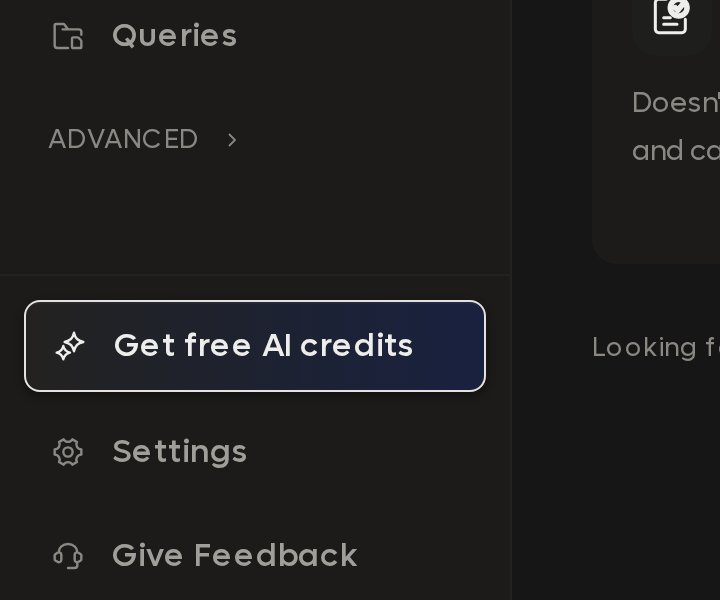
Clicking it opens a short form.
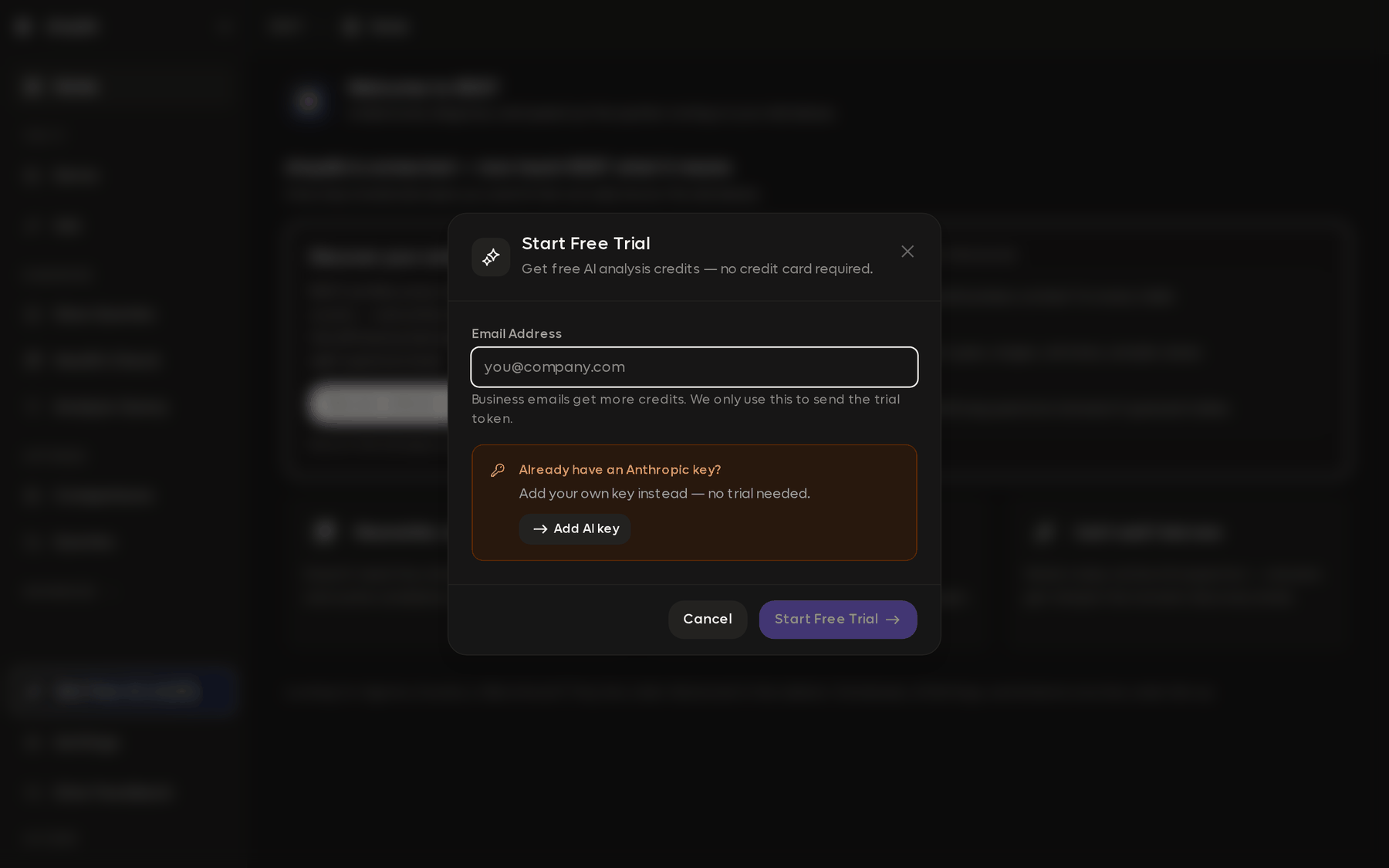
Enter your email address. Business addresses receive a larger balance than personal ones. The address is used to send you the trial token and nothing else.
Start Free Trial. No credit card is involved.
Confirm from the link we send. The balance attaches to your machine, and the sidebar shows what is left of it.
If you already have an Anthropic key, the dialog offers Add AI key so you can skip the trial entirely.
Your own Anthropic key
Under AI keys in Settings you can paste a key you already have.
| Control | Purpose |
|---|---|
| Update key | Store or replace the key |
| Test key | Confirm it works now, rather than halfway through an analysis |
| Use trial credits | Switch back to the RDST trial balance |
The key goes into your operating system keyring rather than
~/.rdst/config.toml. There is no RDST-imposed limit on your own key, which
makes it the better choice for regular work or for anything running unattended.
The CLI reads the same key, so setting it here also covers rdst analyze and
rdst ask on the command line, and the reverse. An ANTHROPIC_API_KEY set in
your environment takes precedence over both.
Features that need access
| Works without it | Needs it |
|---|---|
| Slow Queries | Ask |
| Execution plans and timings in Analyze Query | The written analysis, index recommendations, and rewrites |
| The metrics collected by a Health Check | The report's Detailed Analysis and Next Steps |
| Connecting databases, Comparisons, the Demo | Schema discovery |
You can get a long way without any LLM access at all. Slow Queries will still rank your worst queries, a health check will still tell you the instance is oversized, and Comparisons will still measure a cache. What you lose is the layer that explains why and suggests what to change.
What is sent
Query text, execution plans, and schema metadata go to the LLM provider. The rows your queries return do not, and query text arrives with its literal values already replaced by placeholders.
Privacy and data handling covers this in full, along with what RDST stores locally and how to turn off usage telemetry.
Demo
A working Readyset Platform stack that RDST builds for you in local containers, so you can watch QueryPilot discover hot queries and serve them from cache before pointing anything at your own database.
Connect a database
Add a database to RDST by hand, import your whole fleet from AWS or a managed provider, or reach a private database through an SSH jump host.