Advanced
Code Scan, Agents, and Guards. Less-used tools that sit behind the Advanced section of the sidebar.
Three tools live under Advanced in the sidebar. They are collapsed by default because most days you do not need them, not because they are unfinished.
Code Scan
Points at a directory and extracts the SQL your application generates.
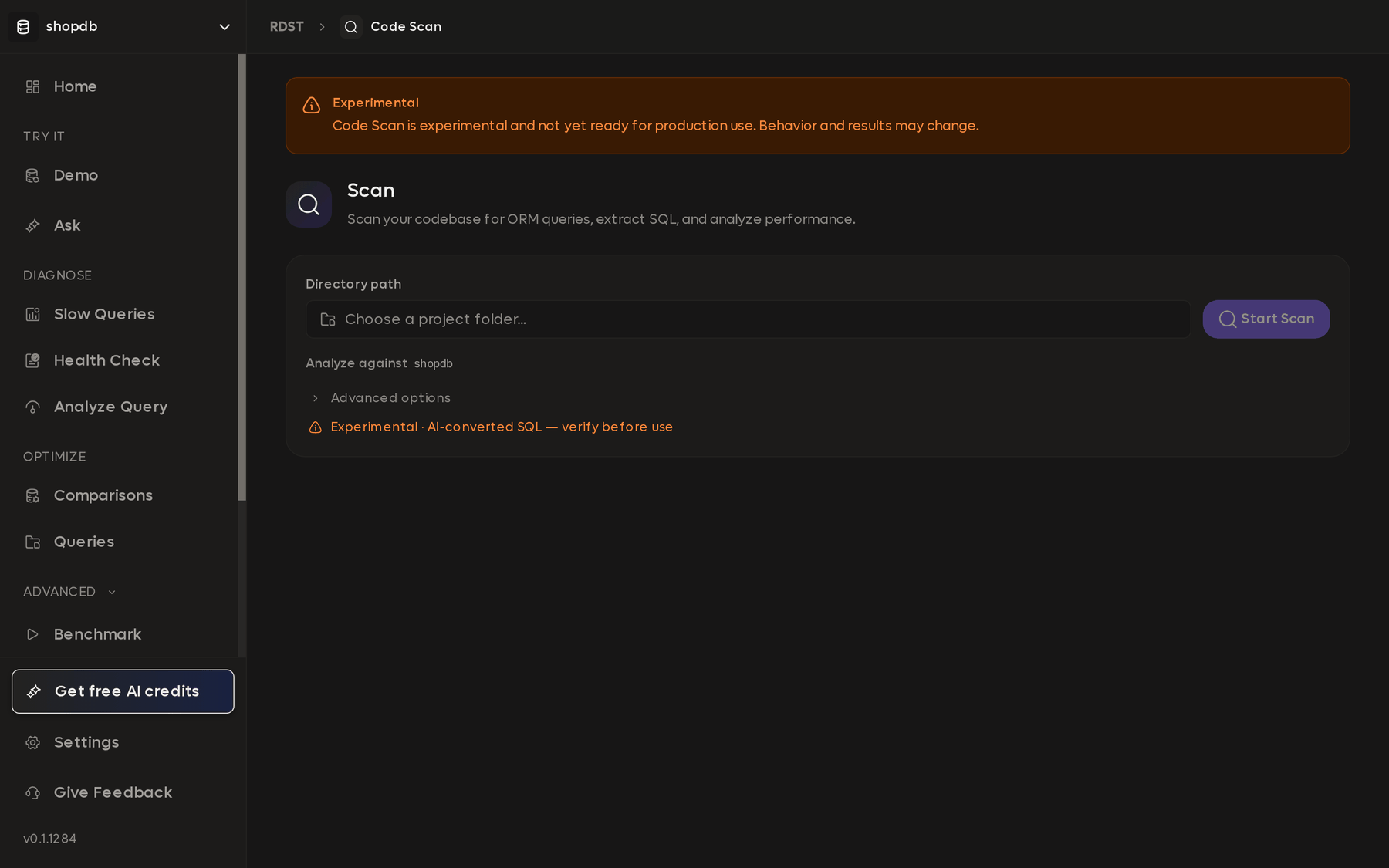
Supports SQLAlchemy and Django for Python, Prisma and Drizzle for TypeScript and JavaScript. Extraction is deterministic and does not need a database connection, so it works against a checkout on a laptop.
The value is seeing what your ORM actually produces. A .filter() chain that
reads cleanly can compile to something with three joins and no usable index, and
this is where that becomes visible. Extracted queries land in
Queries with a risk score.
For running this in CI as a gate on pull requests, use
rdst scan --check.
Agents
Scoped, read-only database access you can hand to something else: an internal tool, a support dashboard, an AI assistant.
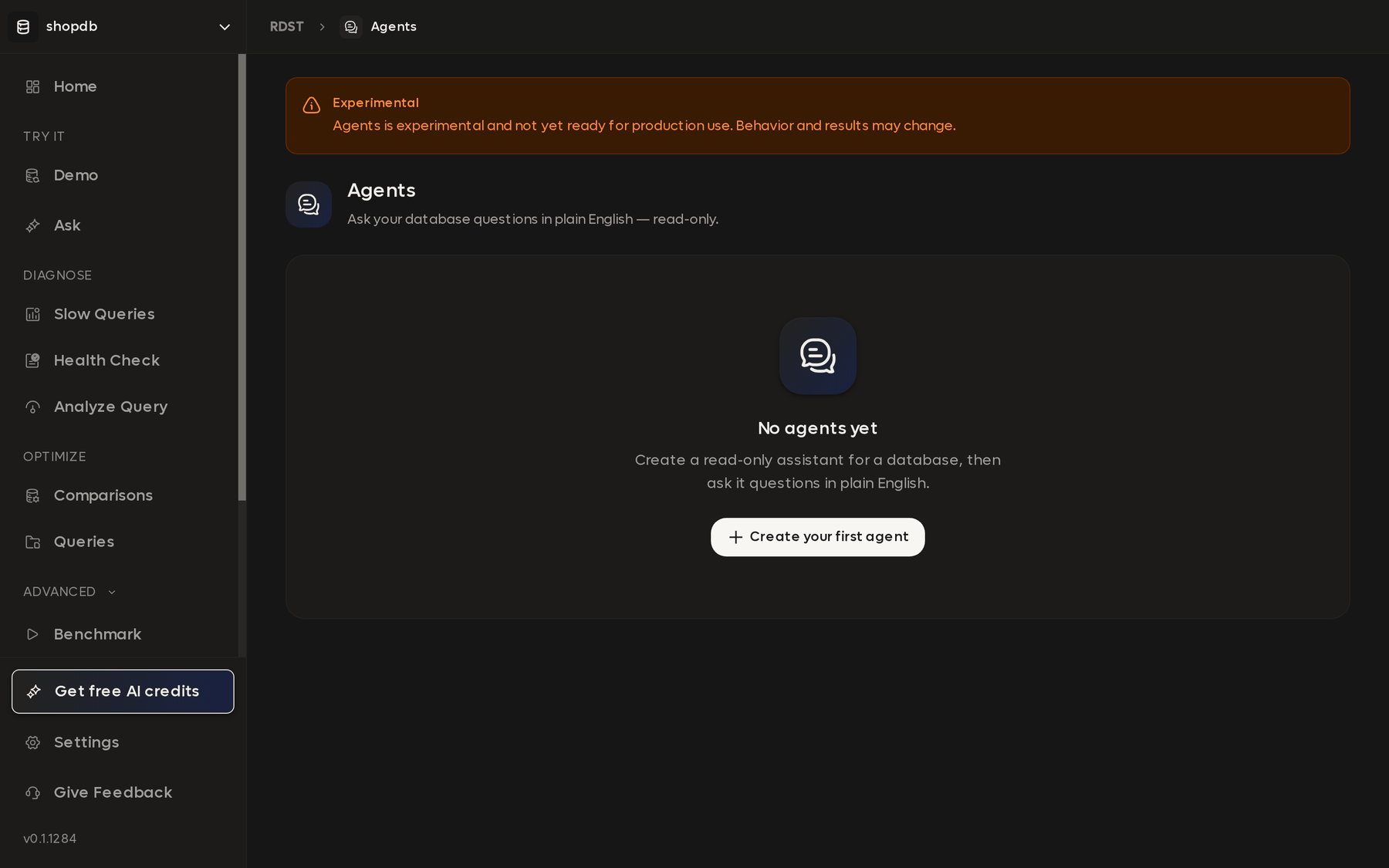
An agent is narrower than a database user. You define which tables it may see and what it may ask, and RDST enforces that. See Data Agents for the full model.
Guards
Policies about which queries are allowed to run.
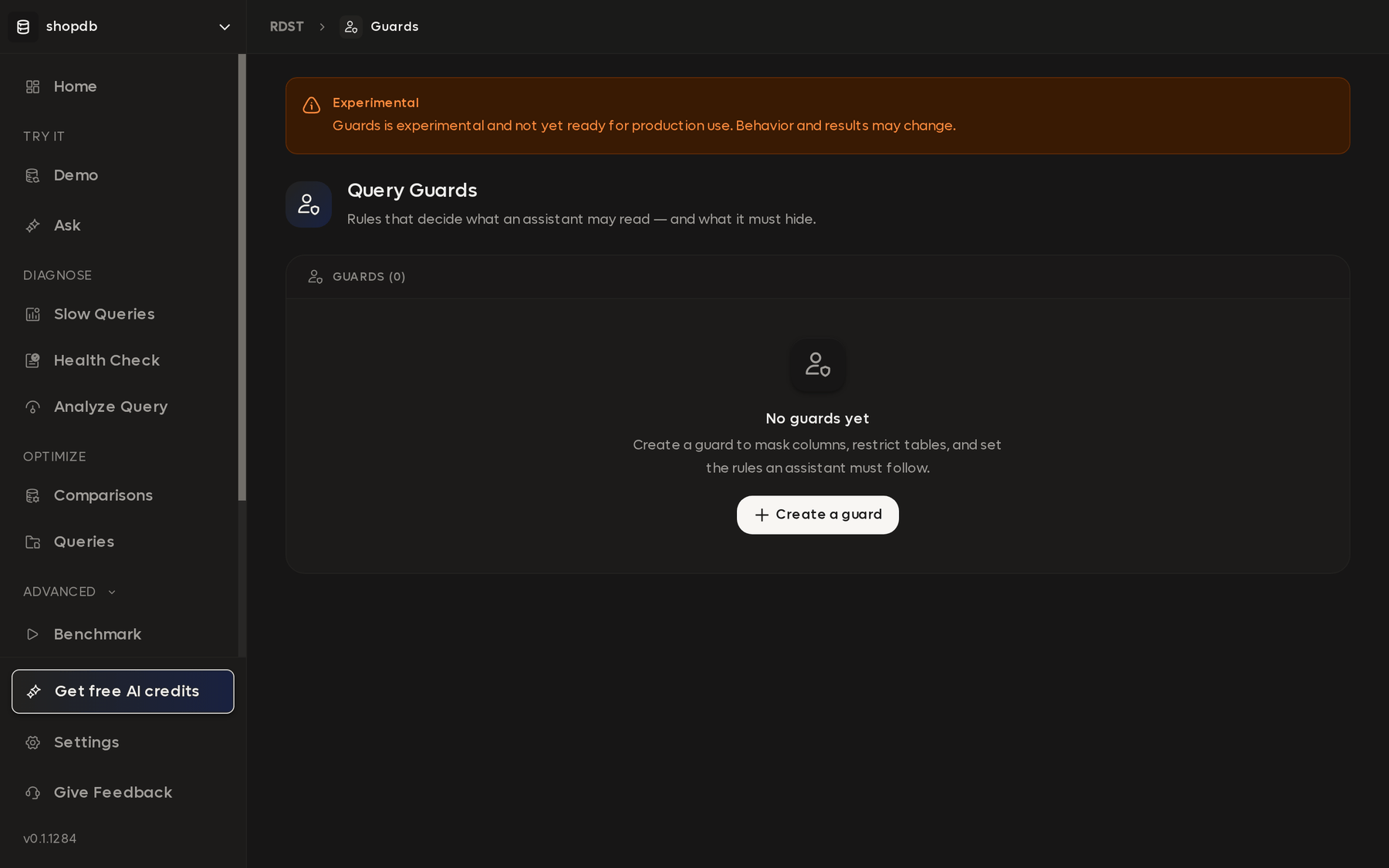
A guard is a rule: block sequential scans over this table, reject anything without
a LIMIT, refuse a cross join between those two. They apply to agents and to
generated queries, which is what makes handing out access reasonable in the first
place.
Agents and Guards are about giving something else access to your database safely. If you are the only one using RDST, you can ignore both.
Comparisons
Run a query against your database and against a Readyset cache side by side, and see the difference in milliseconds rather than guessing at it.
Privacy and data handling
What RDST stores on your machine, what it sends to an LLM and when, what it never sends, and how to turn off usage telemetry.